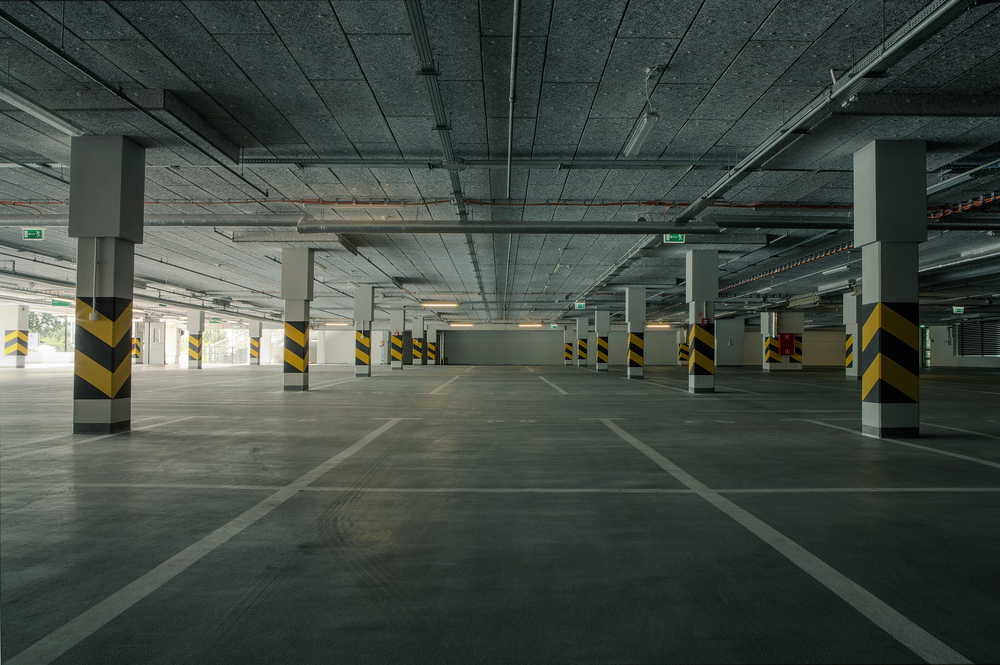
Parking garages are essential components of commercial buildings, healthcare facilities, residential developments, and other properties. While these structures are designed to accommodate vehicle traffic and withstand everyday use, protecting their structural components during a fire is another important consideration. Parking garage fireproofing helps delay the effects of extreme heat on protected structural elements, contributing to building safety and compliance with applicable fire-resistance requirements.
At Sharp NC Group, we provide commercial fireproofing solutions through our Triad Fireproofing & Insulation division. With experience serving contractors and developers throughout the Carolinas and Southeast, we understand the importance of selecting appropriate fireproofing systems for each project’s unique requirements. Planning a new parking garage or renovating an existing structure? Call us at 336-760-0703 to discuss your fireproofing needs.
Why Is Fireproofing Important for Parking Garages?
Parking garages present unique fire protection considerations because of their structural configurations, vehicle traffic, and potential exposure to environmental conditions. When fire-resistance-rated structural components are required, properly installed fireproofing helps maintain their load-bearing capacity for the specified duration under standardized fire testing conditions.
Commercial parking garage fire protection is an important part of the overall building safety strategy. Depending on the structure and applicable requirements, fireproofing can provide several benefits:
- Structural Protection: Fireproofing helps slow temperature increases in protected structural components during a fire.
- Life Safety: Fire-resistance-rated construction supports the building’s overall fire safety design and can provide additional time for evacuation and emergency response.
- Code Compliance: Approved fireproofing systems help structural elements meet required fire-resistance ratings.
- Property Protection: Delaying structural failure can help reduce the potential consequences of fire-related damage.
Not every parking garage requires the same level of structural fire protection. The specific requirements depend on factors such as construction type, building classification, structural materials, and applicable building codes.
Understanding these distinctions early in the planning process helps contractors and building owners make informed decisions.
Understanding Parking Garage Fireproofing Requirements
Parking garage fireproofing requirements are influenced by several factors, including whether the structure is open or enclosed, the type of construction, and the fire-resistance ratings specified in the approved building design.
Because parking structures vary significantly, fireproofing requirements should always be evaluated on a project-specific basis.
Open vs. Enclosed Parking Garages
One of the first considerations is whether a parking garage qualifies as an open or enclosed structure under the applicable building code.
Open parking garages generally incorporate exterior openings that provide natural ventilation. To qualify as an open parking garage, the structure must meet specific code requirements related to the size and distribution of those openings.
Enclosed parking garages do not meet the same open-garage criteria and may be subject to different fire protection, ventilation, and construction requirements.
Fireproofing for open parking structures is not automatically unnecessary simply because a garage has open sides. Depending on construction type, building configuration, and other factors, certain structural components may still require fire-resistance protection.
Project teams should review the applicable code provisions and approved construction documents before determining which elements require fireproofing.
Construction Type and Fire-Resistance Ratings
A parking garage’s construction classification plays an important role in determining structural fire protection requirements.
Depending on the approved design, fire-resistance ratings may apply to structural frames, columns, beams, floor assemblies, and other building components.
These ratings represent the duration that an assembly has demonstrated the ability to meet specified performance criteria under standardized fire testing conditions.
Structural steel fireproofing is one method used to achieve required ratings when the selected construction system relies on protected steel components.
The appropriate fireproofing thickness, material, and application method depend on the approved fire-resistance design rather than a universal requirement for all parking structures.
Local Building Codes and Project Specifications
Building codes establish minimum fire-resistance requirements based on construction classifications and other project characteristics.
For parking garages in North Carolina, project teams must consider the state building code adopted and applicable to the project, along with local requirements and approved construction documents.
Architects, engineers, general contractors, and fireproofing specialists should coordinate to ensure that specified materials and installation methods align with the approved design.
At Sharp NC Group, we work with commercial construction professionals to understand project specifications and provide appropriate fireproofing services.
Common Fireproofing Methods for Parking Structures
Several fireproofing methods may be used to protect structural components in parking garages. The appropriate system depends on the required fire-resistance rating, substrate, environmental conditions, and approved assembly.
Two commonly specified approaches for structural steel are spray-applied fireproofing and intumescent coatings.
Spray-Applied Fireproofing
Spray-applied fire-resistive materials, commonly called SFRM, are used to provide thermal protection for structural components.
These materials are applied to approved surfaces, forming an insulating layer that helps slow heat transfer during fire exposure.
Spray-applied fireproofing for parking garages may be appropriate for structural beams, columns, and other specified components when the selected product and tested assembly meet the project’s requirements.
Important considerations include:
- Required application thickness and coverage
- Compatibility with the structural substrate
- Adhesion and bond strength requirements
- Exposure to moisture and temperature changes
- Potential damage from vehicles or maintenance activities
- Manufacturer-approved application conditions
Not all spray-applied fireproofing products are designed for exposed or high-moisture environments. Selecting a product suitable for the anticipated conditions is essential.
Intumescent Fireproofing Coatings
Intumescent coatings offer another method of protecting structural steel.
When exposed to sufficiently high temperatures, these coatings undergo a chemical reaction that causes them to expand and form an insulating char layer. This layer helps slow the transfer of heat to the underlying steel.
Intumescent systems may be considered for projects where exposed structural steel is part of the architectural design.
Fire-resistant coatings for steel are available in different formulations, with specific products approved for particular exposure conditions and fire-resistance applications.
Before selecting an intumescent coating system, contractors should evaluate primer compatibility, required dry film thickness, environmental exposure, and whether a protective topcoat is necessary.
The complete coating system must comply with the applicable tested design and manufacturer requirements.
Choosing the Right Fireproofing System
Both spray-applied fireproofing and intumescent coatings can provide effective structural fire protection when properly specified and installed.
However, the right choice depends on the project.
For example, an enclosed parking structure with concealed steel framing may have different requirements than an open parking garage featuring exposed structural elements.
Project teams should consider fire-resistance ratings, environmental conditions, appearance, installation accessibility, and long-term maintenance before selecting a system.
We help contractors evaluate their project specifications and identify appropriate fireproofing solutions based on the required application.
Environmental Challenges That Affect Parking Garage Fireproofing
Parking garages can expose structural materials to conditions that differ significantly from those found inside fully enclosed commercial buildings.
Moisture, changing temperatures, and physical impacts can influence the performance and maintenance needs of fireproofing systems.
Moisture and Humidity Exposure
Open parking structures may experience wind-driven rain, condensation, and prolonged humidity exposure.
Certain fireproofing materials can be affected by moisture, making environmental suitability an important selection consideration.
For exposed applications, contractors may need products specifically approved for the anticipated service conditions.
Proper drainage, compatible protective systems, and adherence to manufacturer specifications also help support long-term performance.
Temperature Changes and Seasonal Conditions
Outdoor temperatures and seasonal weather patterns can affect fireproofing installation.
Some products require specific temperature and humidity conditions during application and curing. Applying materials outside these limits can compromise adhesion, curing, or overall system performance.
Contractors should review manufacturer requirements and coordinate installation schedules accordingly.
In regions such as North Carolina, South Carolina, and Southern Virginia, seasonal changes may require additional planning for projects involving exposed structural elements.
Vehicle Traffic and Physical Damage
Parking garages experience regular vehicle movement, maintenance activities, and occasional impacts.
Fireproofing installed on accessible structural elements may be vulnerable to abrasion or accidental damage.
When protection is damaged or displaced, the affected area may no longer provide the intended level of fire resistance.
Routine building maintenance should include attention to visible fireproofing damage, particularly in areas exposed to vehicle traffic or maintenance equipment.
Any necessary repairs should follow approved procedures using compatible materials.
Best Practices for Structural Steel Fireproofing in Parking Garages
Proper installation is essential to achieving the performance specified in a fire-resistance-rated design.
Even when the correct product is selected, inadequate preparation, incorrect application thickness, or poor coordination can create problems during construction and inspection.
Surface Preparation and Substrate Compatibility
Before fireproofing begins, the substrate must be suitable for the selected system.
Depending on the material and manufacturer requirements, preparation may involve removing contaminants, evaluating existing coatings, and confirming compatibility with primers or other surface treatments.
Oil, grease, loose materials, and incompatible coatings can interfere with adhesion.
For intumescent systems, primer compatibility is particularly important because the primer, intumescent coating, and any required topcoat function as part of an approved system.
Following the manufacturer’s preparation requirements helps establish the conditions necessary for proper application.
Correct Application Thickness and Coverage
Fireproofing thickness directly affects the performance of many fire-resistance-rated systems.
The required thickness is determined by the approved fire-resistance design and factors such as structural member characteristics and the specified rating.
Applying less material than required can compromise the intended protection.
Proper quality control may include thickness measurements, visual inspections, and applicable testing procedures to verify compliance with project specifications.
Contractors must also ensure that all structural elements identified in the approved design receive the required coverage.
Coordination With Other Construction Trades
Fireproofing installation must often be coordinated with steel erection, mechanical work, electrical systems, and other construction activities.
Poor scheduling can result in damaged materials, restricted access, or unnecessary rework.
We understand the importance of coordinating our fireproofing services with the broader construction schedule.
Clear communication between the general contractor, project managers, and installation teams helps reduce disruptions and supports efficient project completion.
How to Select the Right Parking Garage Fireproofing Materials
Choosing appropriate parking garage fireproofing materials requires balancing performance requirements with the conditions the system will experience during installation and throughout the building’s service life.
Before selecting a product, contractors and project teams should evaluate several important factors:
- Fire-Resistance Performance: Confirm that the proposed system meets the required rating under an approved fire-resistance design.
- Environmental Suitability: Determine whether the material is approved for interior, exterior, or other anticipated exposure conditions.
- Substrate Compatibility: Verify that the system is appropriate for the structural material and any existing coatings.
- Installation Requirements: Review surface preparation, application thickness, curing conditions, and equipment requirements.
- Durability and Maintenance: Consider accessibility, potential impact damage, and future repair needs.
Selecting appropriate materials during the design and planning stages can help prevent costly changes once construction is underway.
At Sharp NC Group, we work with trusted fireproofing manufacturers and focus on providing solutions that align with project specifications.
Why Choose Sharp NC Group for Parking Garage Fireproofing?
At Sharp NC Group, we understand the importance of reliable structural fire protection in commercial construction.
Through our Triad Fireproofing & Insulation division, we’ve provided specialized fireproofing and insulation services since 2008. Our team works with general contractors, developers, and other construction professionals throughout the Carolinas and Southeast.
Experienced Commercial Fireproofing Professionals
Our experience includes fireproofing applications for commercial and multi-family construction projects.
We understand that each project presents different requirements involving structural materials, installation conditions, scheduling, and code compliance.
We focus on delivering dependable service while meeting the requirements established in approved project specifications.
Certified Applicators and Proven Products
Our team includes manufacturer-certified applicators experienced in specialized fireproofing systems.
We work with established manufacturers, including Carboline and Albi Protective Coatings, to provide reliable fireproofing solutions.
Using appropriate products and following approved installation procedures are central to our approach.
Reliable Installation and Project Coordination
Commercial construction schedules require dependable subcontractors who understand the importance of communication and coordination.
We work closely with project teams to plan installations, address project requirements, and support efficient construction progress.
Our experience with spray-applied systems and intumescent coatings allows us to serve a variety of commercial fireproofing needs.
Fireproofing Solutions Tailored to Project Requirements
No two commercial construction projects are exactly alike.
We evaluate the fireproofing scope outlined in project documents and work with contractors to identify suitable materials and application methods.
Whether your project involves new construction or renovation, our goal is to provide professional fireproofing services that support safety, compliance, and construction efficiency.
Frequently Asked Questions About Parking Garage Fireproofing
Fireproofing requirements can vary significantly depending on the parking structure’s design, construction classification, and environmental conditions. Below, we answer several common questions to help contractors and building owners better understand their options. For assistance with your project, call Sharp NC Group at 336-760-0703.
Do all parking garages require fireproofing?
No. Not all parking garages require applied fireproofing. Requirements depend on factors such as whether the garage is open or enclosed, its construction type, building configuration, and applicable building codes. Some structures may qualify for construction types that do not require applied fireproofing on certain structural elements. The approved building design determines where protection is necessary.
Can spray-applied fireproofing be used in open parking garages?
Yes, certain spray-applied fireproofing products and approved assemblies may be suitable for open parking garages. However, exposure to moisture, temperature fluctuations, and other environmental conditions must be considered. Not every spray-applied product is appropriate for exposed applications, so material selection should follow manufacturer specifications and project requirements.
How often should parking garage fireproofing be inspected?
Inspection needs depend on applicable regulations, building conditions, and maintenance practices. Building owners should arrange evaluations when fireproofing shows signs of damage, deterioration, or displacement, particularly following renovations or impacts. Periodic assessments by qualified professionals can help identify areas requiring attention. Construction-phase inspections are also important for verifying compliance with approved project requirements.
Can damaged fireproofing in a parking garage be repaired?
Yes, damaged fireproofing can often be repaired using approved materials and procedures. The appropriate repair method depends on the original fireproofing system, the extent of the damage, and the applicable fire-resistance requirements. Repairs should restore the specified protection and follow manufacturer instructions and any required approval or inspection procedures.
What information should contractors provide when requesting a fireproofing estimate?
When requesting an estimate, contractors should provide construction drawings, structural details, required fire-resistance ratings, project location, and anticipated construction schedule. Information about environmental exposure and any specified fireproofing products is also helpful. Complete project documentation allows us to better understand the scope of work and prepare an appropriate estimate.
Protect Your Project With Professional Parking Garage Fireproofing
Effective parking garage fireproofing begins with understanding the structure’s specific requirements. From construction classification and fire-resistance ratings to environmental exposure and installation methods, every detail plays a role in selecting an appropriate system.
At Sharp NC Group, we provide commercial fireproofing services backed by experienced professionals, manufacturer-certified applicators, and trusted products. Whether your project requires spray-applied fireproofing or intumescent coatings, we’re committed to delivering reliable solutions that support your construction goals.
Planning a new parking garage or renovating an existing structure? Call Sharp NC Group at 336-760-0703 to discuss your project and learn how our fireproofing services can help meet your structural protection requirements.
For more commercial fireproofing insights, project updates, and industry information, follow us on Facebook and Instagram.